This attraction introduction is compiled from historical materials in the "Zhangjiajie Tour Guide Network" (33519.com · Scenic Spots section). Ticket prices, opening hours, transportation, and contact information mentioned in the text may be outdated. Please refer to the latest official announcements from the scenic area before traveling; some content consists of historical background/cultural introductions and is for reference only.
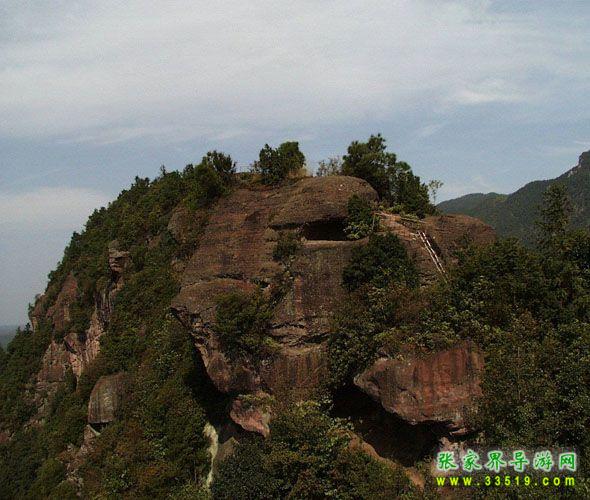
Shiniuzhai was originally named Shiniu Mountain, so called because the overall shape of the mountain closely resembles a giant ox. Shiniu Mountain consists of five strongholds, large and small, and was later renamed Shiniuzhai. Shiniuzhai is located in northeastern Pingjiang, reaching Changsha to the south, connecting to Yueyang to the west, bordering Xiushui (Jiangxi) to the east, and leading to Wuhan (Hubei) to the north. It covers a total area of 12 square kilometers, with the highest peak at 523 meters.
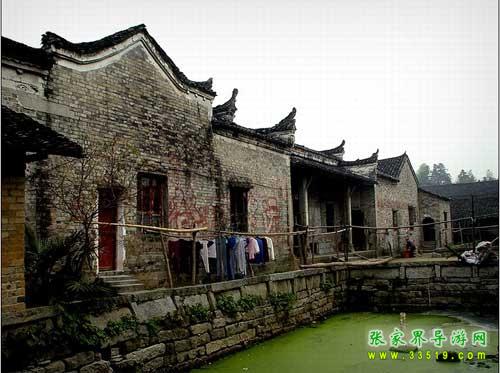
Shiniuzhai is surrounded by mountains on all sides, connecting to Mufu Mountain to the east, leaning against Huanglong Mountain to the north, and resting on Lianyun Mountain to the south. This place has a long history and has always been a military strategic location. The Tongzhi edition of the Pingjiang County Gazetteer records: "In the Gengxu year of the Jianyan era of Song (1130), Liu Zhong invaded, and locals Yu Guorui and Yu Guoqi gathered their clan to defend this place; Luo Xiaofen brought his family to join them and escaped disaster." Later, according to the stone inscription "Record of Shiniuzhai" written by the historian Luo Xiaofen: "...In the fourth year of Xianzong (1265), locals Wang Shiming and Tang Kuang gathered a crowd and rose in rebellion. Wang Shiming proclaimed himself Marshal and guarded Yongxi Stronghold in Jiangxi; Tang Kuang proclaimed himself Military Commissioner of Jianghuai... stationed at Shiniuzhai, and was later lured out by ambush and finally subdued." This was in the spring, the fourth month, of 1279. On the stronghold, there still remain historical sites such as a water city, stone mortars, stone walls, stone gates, and a military training ground. The entrance to the ancient city is steep and narrow—one man can hold it against ten thousand. The ancient walls are all built of stone, rising over 10 meters around the stronghold entrance to defend against enemies attacking from below. Inside the ancient city are an ancient military training ground, a review platform, and ancient official residences. The stone gate used by the rebel soldiers at the stronghold entrance and the stone mortars used for husking rice are still well preserved today.
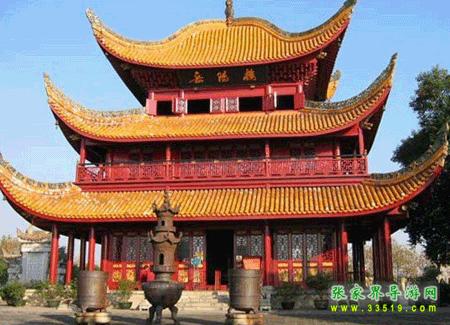
"Most famous mountains are occupied by monks," and Shiniuzhai is no exception. On and below the stronghold, temples and halls once stood like a forest. Jingyan Temple and Songfeng Temple east of the stronghold, and Baiyi Temple and Shifo Temple on the stronghold, still preserve their original ancient architectural styles. Jingyan Temple was once a martial temple with strict monastic discipline; monks from several provinces in Jiangnan who violated the precepts were all sent here for correction, hence the name "Jingyan" ("Quiet and Strict"). Legend has it that of the three cassocks in the whole country, Jingyan Temple possessed one. The temple's site was uniquely chosen and its architectural style distinctive. In those days, ancient trees towered all around, creating a solemn and quiet atmosphere. The mountain path for over a li in front of the temple was paved with strip granite, and visiting monks had to remove their shoes before entering the temple. Because of the many temples, monks of successive generations cultivated here and were buried here after death. When monks or Daoists died, their disciples would choose a site for burial and erect a stone pagoda at the grave; the number of tiers on the pagoda depended on the deceased's status.
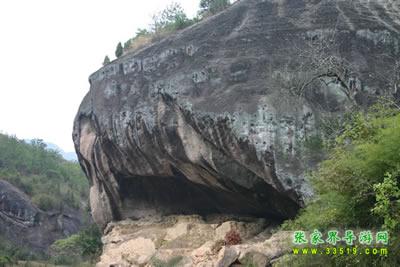
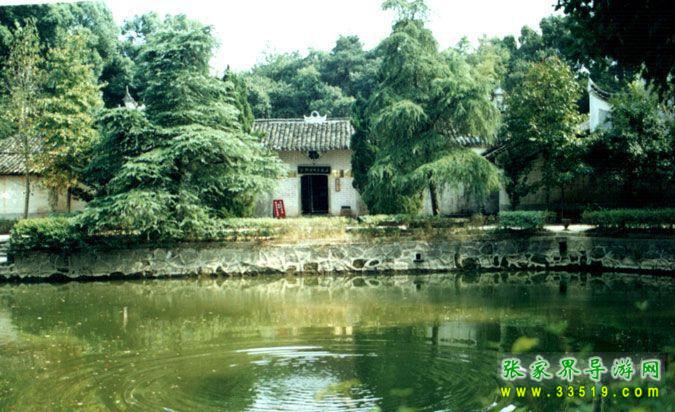
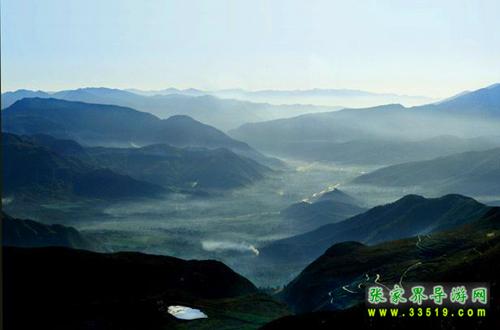
Shiniuzhai has beautiful scenery and enchanting views. Within its bounds, clouds and mist shroud the area, valleys are deep and shaded, mountains and rivers wind in dense profusion, peaks rise and fall, cliffs soar a thousand fathoms, rock faces appear as if split by an axe, and the earth is cinnabar-red. Grotesque rocks, extraordinary peaks, stone caves, and stone cliffs display nature's uncanny workmanship in a thousand forms of breathtaking beauty that make visitors linger. Shiniuzhai is divided into the Great Stronghold and the Small Stronghold. The Great Stronghold could accommodate tens of thousands of people, and the Small Stronghold could hold a thousand. On the strongholds there are wells for drawing water and fields for cultivation.
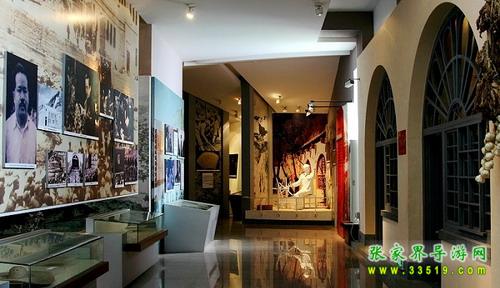
During the years of the revolutionary war, Shiniuzhai was also an area of frequent Red Army activity, and underground couriers often secretly communicated here with the Red Army at Jinggangshan. After the Pingjiang Uprising, Peng Dehuai once led his troops to deploy and rest here. More than ten veteran proletarian revolutionaries, including Gan Weihan and Fu Qiutao, as well as the revolutionary martyr Hu Yun, all once led and organized revolutionary struggles here.
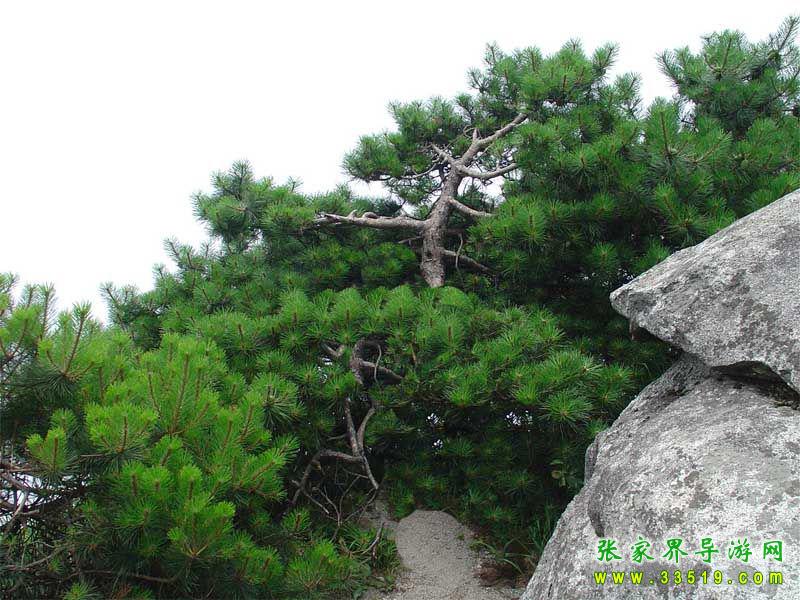
Looking at Shiniuzhai as a whole, the western basin is surrounded by mountains on all sides, with willows lining the paths, neat farmhouses, crowing cocks and barking dogs, and abundant fish and rice. The main upper course of the Miluo River runs through it. The central mountain section is majestic, with towering peaks, crisscrossing ravines, verdant pines and cypresses, murmuring streams, and countless extraordinary rocks and caves. The southeastern section has exposed mountain bodies, caves scattered everywhere, crisscrossing streams, and mountain forms of wonderful natural shape, each with its own character. For example, Shifo Mountain rises abruptly from flat ground, steep and towering, with a cliff face on the east side spreading out like a banner; viewed from afar it resembles a fiercely fluttering flag, forming a mutually supporting triangular position with Zhong Mountain and Gu Mountain. The top of Shifo Mountain's cliff is shaped by nature to closely resemble a human head, and people have long worshipped it as a stone Buddha. Below the cliff, an ancient temple has kept incense burning year-round without interruption. Geologists have determined that 80 million years ago this area was a vast ocean, and about 30 million years ago crustal movement pushed it up, forming the Danxia landform of Shifo Mountain. Since ancient times, Shifo Mountain has attracted many devout men and women and literati who came to worship Buddha and sightsee, leaving behind many widely recited and beautiful poems. Shiniuzhai has many stone caves of varying sizes: some are tall and large like Buddhist halls, able to hold over a thousand people; some are deep and unfathomable, able to pass through the mountain; some have caves within caves. For example, Guiwu Cave has spring water forming a pool inside, with spring water tinkling; the cave is sometimes large and sometimes small—the large sections have jagged rocks, while the small sections are too narrow for one person to pass. The spring water inside and outside the caves is of excellent quality, with no off-flavors, no chemical contamination, and no toxic elements—it is naturally pollution-free water.
Shiniuzhai lies in the transition zone from the mid-subtropical to the north-subtropical belt, with a humid continental monsoon climate—cool in summer and warm in winter, with abundant rainfall. There are as many as 481 species of trees, including first-class protected plants such as dawn redwood, second-class protected plants such as ginkgo, and third-class protected plants such as purple bamboo. In addition, there are over 700 species of Chinese medicinal plants (including 57 key wild medicinal species). There are about 107 categories of ornamental flowers and grasses. There are 119 species of wild birds and animals (including 52 rare species), including national first-class protected animals such as the clouded leopard, second-class protected animals such as the big-headed turtle, pangolin, and otter, and third-class protected animals such as the fox, porcupine, Chinese hare, bamboo partridge, mountain turtle dove, cobra, and king rat snake. Mineral resources include tantalum-niobium, uranium, beryl, mica, feldspar, kaolin, and quartz. Below Shiniuzhai is a commercial street—Jiangshi Street—whose commercial resident population reaches 2,000. The street market closely connects with Ma'ao Town and Shuiyuan Township of Xiushui County, Jiangxi. The market gathers merchants, goods are dazzling, and border trade is frequent, making it a gathering place for goods at the border of Hunan, Hubei, and Jiangxi. Crafts and local specialties have long been renowned; bamboo crafts, chestnuts, kiwi and other mountain fruits, eucommia, magnolia bark, black goats, Pingzhu, alpine cloud-mist tea, cloud-mist rice, cloud-mist chrysanthemum, and other precious Chinese medicinal materials and local specialties sell well beyond the region. The area has complete infrastructure, county and township roads extending in all directions, convenient transportation, full dining facilities, and good public order—an ideal feng shui treasure land combining tourism and leisure.