
This attraction introduction is compiled from historical materials in the "Zhangjiajie Tour Guide Network" (33519.com · Scenic Spots section). Ticket prices, opening hours, transportation, and contact information mentioned in the text may be outdated. Please refer to the latest official announcements from the scenic area before traveling; some content consists of historical background/cultural introductions and is for reference only.
[Ticket Price Information Update · 2026-09-14]
- The Fenghuang Ancient City urban area itself is free to enter (no main gate ticket required)
- Fenghuang Nine Scenic Spots Combined Ticket 128 yuan (there is also a claim of 148 yuan; subject to official announcement)
If old ticket prices/opening hours appear in the main text, they are historical materials and may be outdated, for reference only.
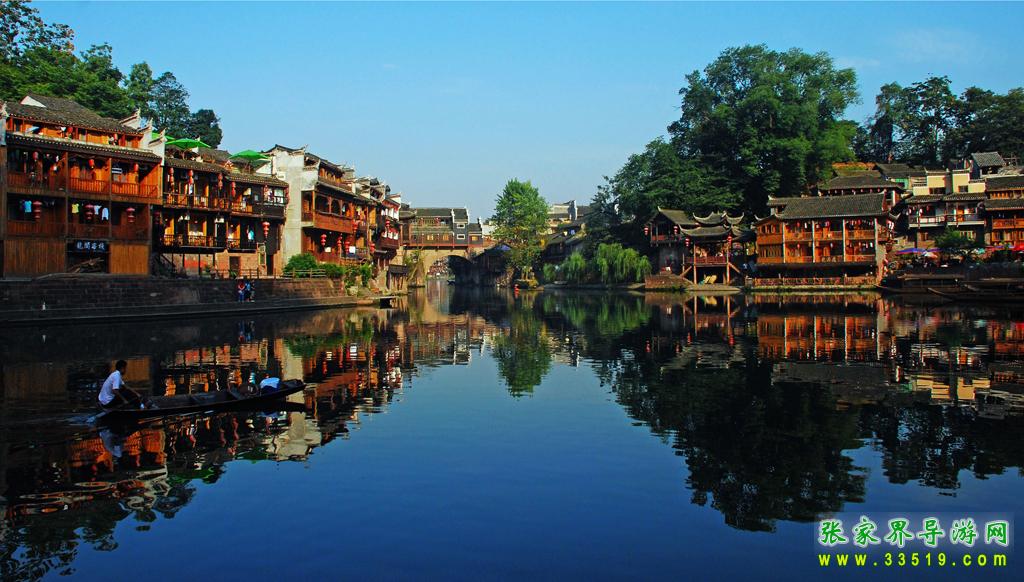
Fenghuang Ancient City is a famous historical and cultural city of China, one of the first batch of China's strong tourism counties, and a national 4A-level scenic area. It was once praised by the famous New Zealand writer Rewi Alley as the most beautiful small town in China. Its geographical location can be summarized as: "resting on Yunnan and Guizhou to the west, controlling Chenyuan to the east, dominating Sichuan and Hubei to the north, and guarding the Guangxi border to the south." It is adjacent to Dehang Miao Village in Jishou, Mengdong River in Yongshun, and Mount Fanjing in Guizhou, and is a necessary route between Huaihua, Jishou, and Tongren in Guizhou. As a national historical and cultural city, Fenghuang's scenery organically integrates natural and cultural qualities into one place; the sense of weight seen through it may be precisely the essence of its charm that attracts visitors from all directions. The ancient city was built during the Kangxi period of the Qing Dynasty. This "Pearl of Xiangxi" is truly "small"—so small that there is only one decent east-west main street in the city, yet it is a green corridor.
Legend has it that after the divine bird "Phoenix" of Arabia (ancient India) reached five hundred years of age, it gathered fragrant wood and burned itself. It was reborn from the ashes, extraordinarily beautiful, and would never die again. This bird is the phoenix, king of all birds in China.
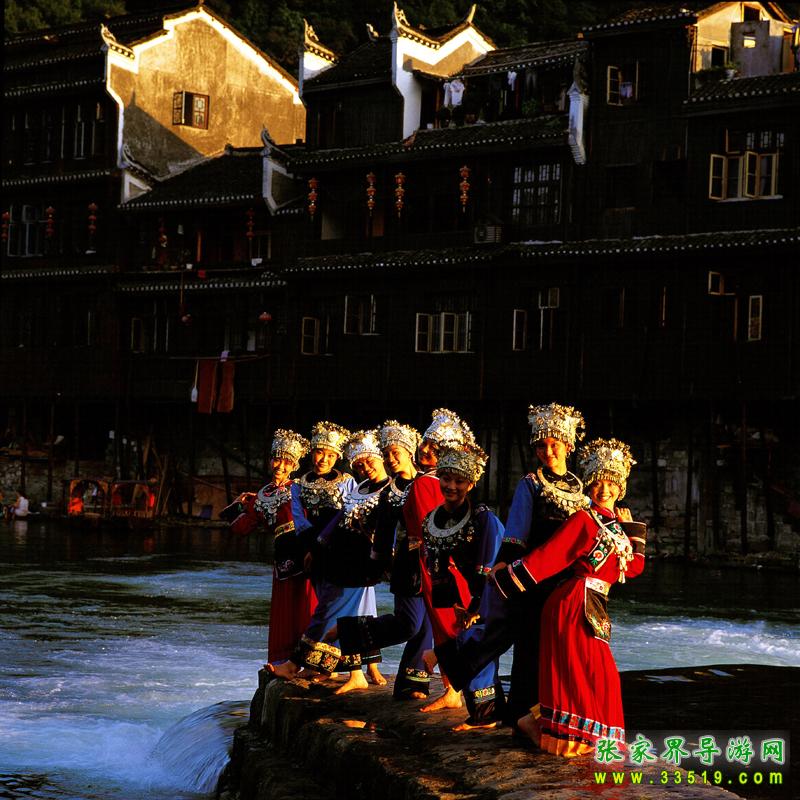
Southwest of Fenghuang, there is a mountain that closely resembles a phoenix spreading its wings to fly, and the ancient town was named after it. The ancient town is located on the southwestern edge of Xiangxi Autonomous Prefecture in Hunan Province. The county has a total area of over 1,700 square kilometers and a population of 440,000. It is a county predominantly inhabited by ethnic minorities, mainly the Miao and Tujia peoples.
In Mr. Shen Congwen's book Border Town, there is a passage describing Fenghuang: "If one searches on a somewhat older map from a hundred years ago, one should be able to find, in an extremely remote corner of northern Guizhou, eastern Sichuan, and western Hunan, a small dot named 'Zhen'gan.' There, like other small dots, there should in fact be a city, and in that city, three to five thousand people settled......" This is the ancient city of Fenghuang, veiled in mystery.
Fenghuang County has been a region inhabited by the Miao and Tujia peoples since ancient times. In the Ming Dynasty, the Wuzhai Zhangguan Si (Chief's Office) was first established; in the Qing Dynasty, Fenghuang Ting was established, named after Mount Fenghuang within its territory. In 1913, it was changed to Fenghuang County. In 2001, with special approval from the State Council of the People's Republic of China, it became China's 101st historical and cultural city.
During the Spring and Autumn and Warring States periods, Fenghuang was "the land of the Five Streams Miao barbarians" and belonged to the territory of the State of Chu. According to cultural relics unearthed in this county, Central Plains culture had already influenced this place at that time. When Qin unified the realm, it divided it into 36 commanderies, and Fenghuang then belonged to Qianzhong Commandery.
In the fifth year of Emperor Gaozu of the Han Dynasty, Qianzhong Commandery was changed to Wuling Commandery. Therefore, in the Western Han and Eastern Han periods, Fenghuang was part of Chenyang County and belonged to Wuling Commandery.
During the Three Kingdoms period, Fenghuang first belonged to Chenyang County and Wuling Commandery, under Shu; later, after Liu Bei was defeated, Wu occupied the area, and Fenghuang still belonged to Wuling Commandery.
During the Western Jin, Fenghuang belonged to the territory of Tancheng County and was under Wuling Commandery; during the Eastern Jin, it was the territory of Wuyang County, also under Wuling Commandery.
During the Northern and Southern Dynasties period, Fenghuang always belonged to Wuling Commandery.
When the Sui Dynasty unified the realm, Chenyang County was changed to Chenxi County. Fenghuang then belonged to Chenxi County and was under Yuanling Commandery.
In the early Tang Dynasty, it was the territory of Jinzhou. In the third year of Wude under Emperor Gaozu of Tang, Mayang County was established, and Fenghuang belonged to Mayang County. In the third year of Chuigong under Empress Wu of Tang, Fenghuang was separated from Mayang County, and the following year Weiyang County was established, with the county seat at Huangsqiao, which is today's Huangsiqiao Ancient Town. The ancient Weiyang County belonged to Luyang Commandery of Jinzhou.
In the seventh year of Taiping Xingguo under Emperor Taizong of Song, Weiyang County was renamed Zhaoyu County. In the eighth year of Xining under Emperor Shenzong of Song, Zhaoyu County was abolished and Mayang County was re-established, and Weiyang was again placed under Mayang County.
In the Yuan Dynasty, the Wuzhai Si was established, under the Sinan Anfu Si. This was the period of the Tusi (native chieftain) regime, governed by the ruling figures of the county's ethnic minorities. The Wuzhai Si was located in what is now Fenghuang County town.
The Ming Dynasty inherited the Yuan system, establishing the Wuzhai Zhangguan Si and the Ganziping Zhangguan Si, both under the jurisdiction of the Baojing Xuanwei Si. In the third year of Yongle of the Ming, the Ganziping Zhangguan Si was established, still under the jurisdiction of the Baojing Xuanwei Si. In the third year of Longqing of the Ming, Fenghuang Camp was established at Mount Fenghuang.
In the third year of Shunzhi of the Qing Dynasty, in order to suppress the Miao people, the Qing court adopted a series of military and political measures and established a Zhen'gan Assistant General in Wuzhai Division. In the third year of Kangxi, it became the seat of the Chenyuan Yongjing Dao. In the thirty-ninth year of Kangxi, the Yuanzhou Town Chief Military Officer was moved to Wuzhai Division City, and the Zhen'gan Assistant General was rotated to garrison Yuanzhou.
In the forty-third year of Kangxi, the Miao people submitted to governance, the native chieftains were abolished, and Fenghuang Camp was established in the present county seat, with a subprefectural magistrate set up at the original Fenghuang Camp on Fenghuang Mountain. The subprefectural magistrate was originally supposed to manage local administration, but at that time the native chieftains held great power, creating a situation in which native and circulating officials coexisted.
In the seventh year of Yongzheng, the Chenyuan Yongjing Military Defense Circuit was established.
In the first year of Qianlong, Yuanzhou was changed to a prefecture under military defense; in the sixteenth year, Fenghuang Camp was changed to Fenghuang Subprefecture, and the subprefectural magistrate was promoted to assistant prefect.
In the second year of Jiaqing, Fenghuang Subprefecture was upgraded to a directly administered subprefecture under the Hunan Provincial Administration Commission.
After the Xinhai Revolution overthrew the Qing Dynasty, on New Year's Day 1912, Fenghuang was restored.
In September of the second year of the Republic of China, Fenghuang Subprefecture was abolished and reorganized as Fenghuang County, still the center of military and political rule in western Hunan.
Fenghuang County was liberated in 1949 and initially belonged to Yuanling Special District; in 1955 it was placed under the Xiangxi Miao Autonomous Prefecture, and in 1957 it was transferred to the Xiangxi Tujia and Miao Autonomous Prefecture, where it remains to this day.
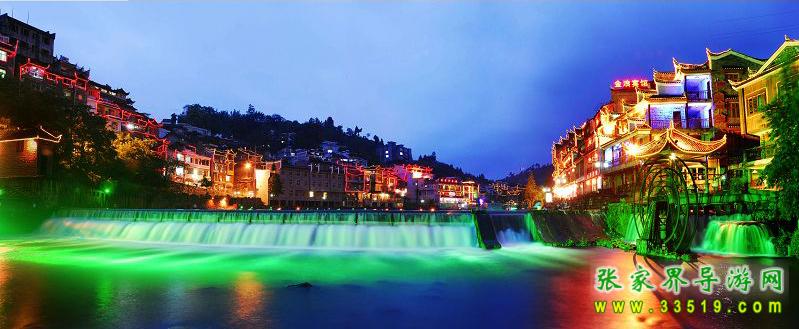
Fenghuang Ancient City was first built in the forty-third year of Kangxi of the Qing Dynasty [1704]. After more than 300 years of vicissitudes, its ancient appearance still remains. The East Gate and North Gate ancient city towers still stand. The bluestone streets in the city, the wooden stilted houses along the river, and buildings such as Chaoyang Palace, the Ancient City Museum, the Yang Family Ancestral Hall, Shen Congwen's Former Residence, Xiong Xiling's Former Residence, the Heavenly King Temple, the Dacheng Hall, and the Wanshou Palace all possess ancient city characteristics.
Fenghuang Ancient City takes Huilongge Ancient Street as its central axis, connecting countless small alleys and linking the whole city. Huilongge Ancient Street is a bluestone road that forms a line longitudinally according to the terrain and is laid out in crisscross fashion laterally. Since ancient times it has been a bustling market, and today it is even more vibrant. One of the landmark buildings of Fenghuang Ancient City, Hongqiao, originally named Wohong Bridge, has a long history. The North Gate City Tower of Fenghuang Ancient City was originally named "Bihui Gate." It is built of red sandstone blocks and served both a military defensive function and a urban flood-control function, making it a solid barrier for the ancient city. The buildings on both sides of Fenghuang Ancient Street have upturned eaves and interlocking brackets, and the shops display a dazzling array of ethnic handicrafts. The strong ancient charm reveals the profound ethnic cultural heritage of the ancient street.
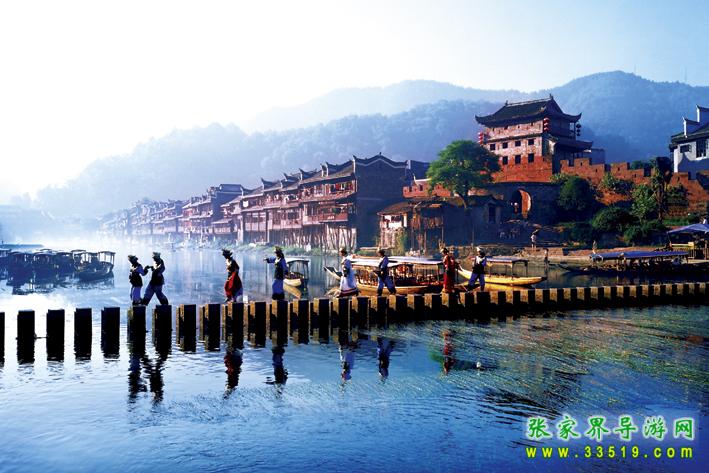
Fenghuang Ancient City is divided into new and old urban areas. The old city nestles against the mountains and faces the water, with the shallow Tuo River flowing through the city. The city wall built of red sandstone stands on the bank, and Nanhua Mountain sets off the ancient city towers. The towers are still from the Qing Dynasty, and the rusted iron gates still show their former majestic appearance. Below the North Gate, a narrow wooden bridge spans the wide river, supported by stone piers; even two people facing each other must turn sideways to pass. This was once the only passage out of the city.
Local Specialties of the Ancient City
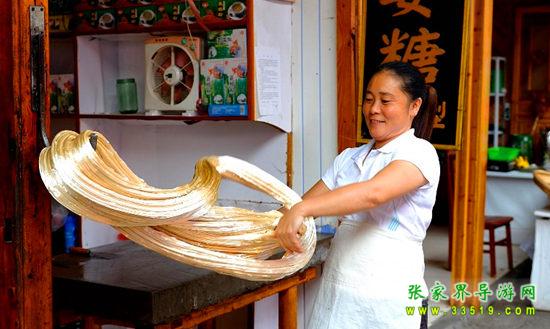
Local specialties: Blood Cake Duck, Pine Mushroom Oil, Miao flower belts, Tujia brocade, pointed chestnuts, chestnuts, golden pomelo, mandarin oranges, kudzu powder, ginkgo, pangolin, giant salamander, "Miliang No. 1" kiwifruit, tie-dye, wild jar mushrooms, batik, Fenghuang Ancient City ginger candy, Miaoshan ginger candy crisp, Miao-style pickled radish.
Famous Figures
Premier of the Republic of China, philanthropist, and educator Xiong Xiling; writer Shen Congwen; painter Huang Yongyu; generals Chen Dounan, Tian Xingshu, and Zheng Guohong; and Chinese Academy of Sciences academician Xiao Jimei.
The Eight Wonders of Fenghuang
1. The market by the Tuo River and the women pounding clothes by the river.
2. The stilted houses of Shawan.
3. The open-air dining seats by the Tuo River outside the North Gate.
4. Wenchangge Primary School, which nurtured Shen Congwen and Huang Yongyu.
5. Huangsiqiao Ancient City.
6. The Confucian Temple, Heavenly King Temple, Wuhou Shrine, Wenchangge, and Bijia City; they can be found by checking a map.
7. The barbershop with calligraphy by Huang Yongyu; the master has a special massage skill, specializing in treating stiff neck.
8. The ancient theater stage is a gathering place for local painters.
Introduction to Scenic Spots
[Boating on the Tuo River]
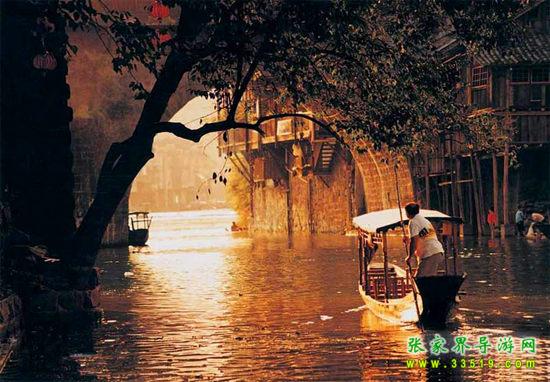
The Tuo River is the mother river of Fenghuang Ancient City. It flows gently along the city wall, nurturing the sons and daughters of the ancient city for generations. Boarding a black-awning boat, listening to the boatman's work chants, and looking at the century-old Tujia stilted houses on both banks gives a distinctive charm. Going downstream and passing through Hongqiao, a picture of Jiangnan water town unfolds before your eyes: Wanshou Palace, Wanming Pagoda, Duocui Tower...... A feeling of being far from the mundane world arises spontaneously. On the south bank of the Tuo River is the ancient city wall, built of purplish-red sandstone, elegant yet majestic. The city wall has two towers, the East and North towers, which have endured many vicissitudes and remain spectacular.
The Tuo River water is clear, and the channel by the city wall is very shallow, with a gentle and slow current. You can see water plants swaying in the soft waves and can pole a long bamboo pole to trace upstream. The groups of stilted houses built along the Tuo River are near the East Gate Hongqiao and the North Gate Jumping Rock, standing sparsely on thin legs in the Tuo River like a landscape that will never return.
[Chen Dounan Ancient Residence]
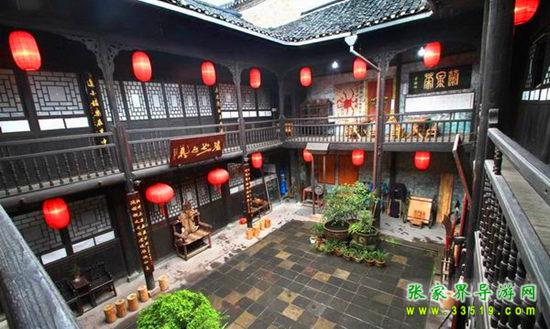
The Chen Dounan Residence in Fenghuang Ancient City was built in the 28th year of Guangxu of the Qing Dynasty (1902). It is located at No. 1 Wujia Lane in the ancient city, between the East Gate City Tower and the Yang Family Ancestral Hall. It covers an area of 366.6 square meters and consists of a front section, a courtyard, a central hall, and a rear section. It is a four-sided water-returning corridor-style courtyard, with high and tightly sealed fire walls around it, making it a typical Jiangnan-style siheyuan. The residence was a general's mansion during the Republic of China period. The Chen family produced two major generals of the National Revolutionary Army. General Chen Dounan (1886–1931) was a colleague of He Long in the Xiangxi Patrol Defense Army between 1924 and 1925 and had close ties with him. In 1926 he participated in the Second Northern Expedition. In 1928, when He Long led the Workers' and Peasants' Revolutionary Army and suffered setbacks while making revolution in southern Hubei and northern Hunan and came to western Hunan, Chen Qüzhen assigned Chen Dounan to support the workers' and peasants' revolution led by He Long. In 1931, he died in a Hankou hospital after treatment for a severe mouth sore was ineffective. General Chen Fan (1909–1943) was Chen Dounan's nephew. In 1937 he led troops in the War of Resistance Against Japan and fought a bloody battle at Jiashan. In 2005, the Central Committee of the Communist Party of China awarded a certificate and medal commemorating the 60th anniversary of the victory of the Chinese People's War of Resistance Against Japan.
The clay statue of the Chen ancestors is the final masterpiece of Master Zhang Qiutan, a successor of Clay Figurine Zhang, and has been praised by experts and professors as a national-level and even world-class fine work of clay sculpture art.
Moreover, Chen Dounan Residence was also an interior filming location for more than ten famous film and television dramas, including "Tales of Suppressing Bandits in Wulong Mountain," "Bloody Xiangxi," "Father's War," "Soldier," "Rescuing Female Soldier Situ Hui," "The Last Miao King," "My Heart Flies," and "Past Events in Xiangxi."
[East Gate City Tower]
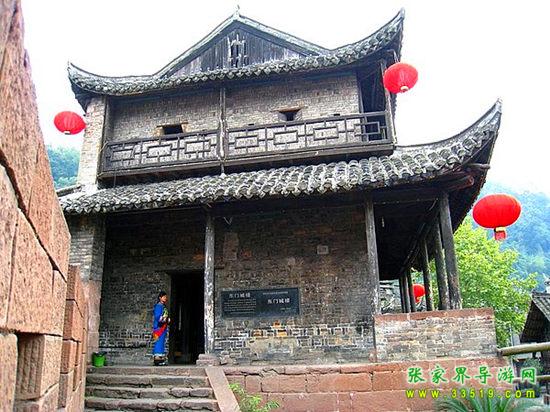
The East Gate City Tower is located in the east of the city, close to the Tuo River. It was originally named "Shengheng Gate" and is one of the four great gates of Fenghuang Ancient City.
The East Gate City Tower was first built in the fifty-fourth year of Kangxi of the Qing Dynasty (1715). The lower part of the gate is built of purplish-red sandstone, while the upper city tower is built of ancient bricks. The gate is 3.5 meters wide and 4 meters high, in a semicircular arch. Both gate leaves are wrapped in iron sheets and densely studded with round-headed iron nails, making them solid and firm. The city wall is built entirely of red sandstone blocks, finely drilled and of uniform specifications. The wall is 0.8 meters thick; the lower inner and outer sides are built of stone blocks with lime mortar, while the middle is filled with crushed stone and clay, compacted layer by layer. The filling at the top was changed to a three-in-one mixture of lime, pebbles, and loess, about 0.33 meters thick, covered with red sandstone blocks. The city tower is 11 meters high, and above the gate there are 8 embrasures. It has a hip-and-gable roof, covered with a waist eave, with upturned eaves and corners, exquisite and spectacular.
[Shen Congwen's Former Residence]
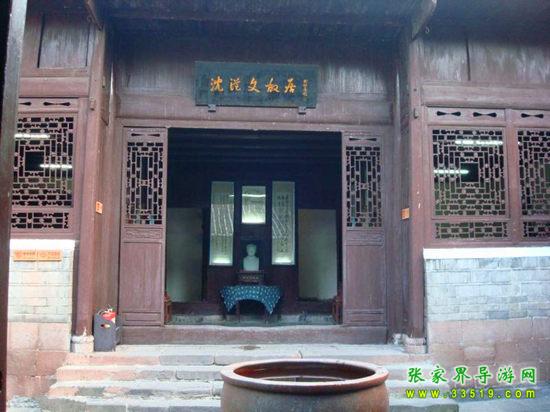
The world came to know and understand Fenghuang starting with Shen Congwen. On December 28, 1902, Mr. Shen Congwen, a famous Chinese writer, historian, and archaeologist, was born in a typical southern ancient siheyuan on Zhongying Street in Fenghuang Ancient City. The siheyuan was built by Mr. Shen Congwen's grandfather Shen Hongfu, who once served as the Guizhou provincial military commander in the Qing Dynasty, after purchasing and demolishing an old residence in the fifth year of Tongzhi (1866). It is a single-story building enclosed with fired bricks. The siheyuan is divided into front and rear sections, with a courtyard paved with square red stones in the middle and wing rooms on both sides, totaling 11 rooms.
The houses are of column-and-tie wooden structure, enclosed with one-bucket-one-eye composite walls. The horse-head walls are decorated with ao-head ornaments, and the doors and windows are carved and openwork, small and exquisite, antique and elegant. The entire building has a strong ancient city character of Ming and Qing architecture in western Hunan. Already famous in the literary world in the 1920s and praised as "China's first-rate modern literary writer, second only to Lu Xun" (Jeffrey C. Kinkley, Shen Congwen's Thought), Mr. Shen Congwen spent his legendary childhood in the ancient city. Shen Congwen's life was a life of hardship and dedication. From 1917 to 1922 he drifted in the Yuan River basin of western Hunan; in 1923 he burst into Beijing, and from 1923 to 1928 made a living by writing in Beijing; from 1928 to 1930 he served as a lecturer at China Public School in Shanghai and concurrently edited literary supplements for newspapers such as Ta Kung Pao and Yishi Bao; from 1931 to 1933 he was a lecturer at Qingdao University; from 1934 to 1939 he edited national primary and secondary school Chinese textbooks in Beijing; from 1939 to 1947 he was a professor at National Southwestern Associated University in Kunming; from 1947 to 1949 he was a professor at Peking University; from 1950 to 1978 he was a cultural relic researcher at the National Museum of Chinese History in Beijing; and from 1978 to 1988 he was a researcher at the Institute of the Chinese Academy of Social Sciences.
Mr. Shen Congwen's literary works, such as Border Town, Xiangxi, and Congwen's Autobiography, have had major influence at home and abroad. His works have been translated and published in more than forty countries, including Japan, the United States, the United Kingdom, and the former Soviet Union, and have been selected into university textbooks in more than ten countries or regions, including the United States, Japan, South Korea, and the United Kingdom. He was twice nominated as a candidate for the Nobel Prize in Literature. Mr. Shen Congwen was not only a famous writer but also a famous historian and archaeologist. He wrote and published academic monographs such as Chinese Silk Patterns, Tang and Song Bronze Mirrors, Dragon and Phoenix Art, Warring States Lacquerware, and Studies of Ancient Chinese Costume. In particular, the monumental work Studies of Ancient Chinese Costume had great influence and filled a gap in China's cultural history.
Shen Congwen's Former Residence was listed in 1991 as a key cultural relic protection unit of the provincial people's government, and funds were allocated for its renovation. The former residence now displays Mr. Shen's surviving calligraphy, manuscripts, personal belongings, and portrait, and has become one of the most attractive cultural landscapes in Fenghuang, with an endless stream of visitors paying their respects every day.
[Xiong Xiling's Former Residence]
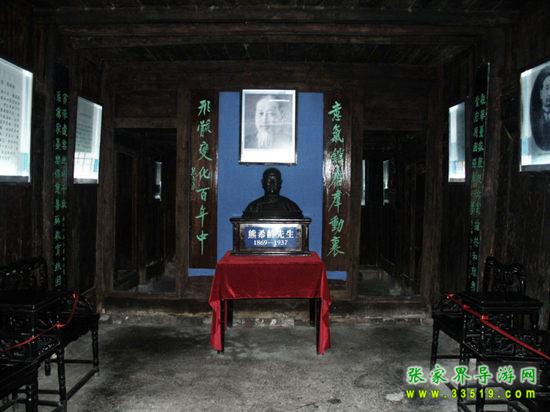
Xiong Xiling's Former Residence is located in a small alley on Wenxing Street in the north of the ancient city. Two hundred meters east of the former residence is the beautiful Tuo River. The former residence is a siheyuan of southern antique wooden-tile structure. It is relatively low but very exquisite. The four existing rooms of the former residence basically retain their original appearance and are rich in Miao flavor. The former residence is a county-level key cultural relic protection unit.
On June 25, 1869 (lunar calendar), Mr. Xiong Xiling was born here and spent his childhood here. He was naturally intelligent and was called a "Hunan child prodigy." At fifteen he passed the imperial examination at the county level, at twenty-two he passed the provincial examination, and at twenty-five he passed the metropolitan examination, later being selected as a Hanlin academician. In 1913 he was elected the first popularly elected Premier of the Republic of China. Because he opposed Yuan Shikai's restoration of the monarchy, he was soon forced to resign. In his later years, Mr. Xiong devoted himself to charity and education, and in 1920 founded the famous Xiangshan Charity Orphanage. On December 5, 1937, this man of influence died in Hong Kong at the age of 67. At that time the nation held a state funeral for him.
[Yang Family Ancestral Hall]
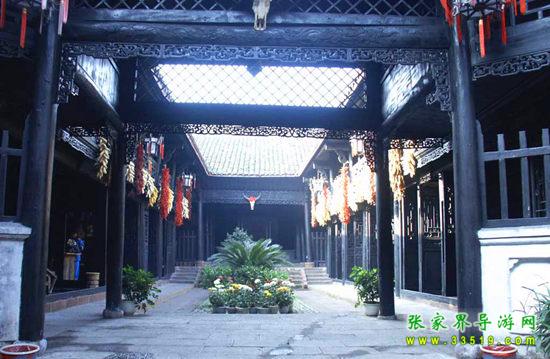
The Yang Family Ancestral Hall was first built in the 16th year of Daoguang (1836). It is a wooden-structure siheyuan with two stories above and below, covering 770 square meters, and consists of a main gate, theater stage, passage hall, corridor rooms, and main hall, forming a rectangular layout. The theater stage has a single-eave hip-and-gable roof, with ruyi interlocking brackets under the eaves. It is 16 meters high, and the four stage pillars are carved with dragons and phoenixes. The theater stage is of column-and-tie structure, while the main hall is of post-and-lintel structure. The entire building is finely crafted and rich in ethnic characteristics. It is a county-level key cultural relic protection unit. The Yang Family Ancestral Hall is located by the ancient city wall in the northeast of the county seat. It was donated and built in the 16th year of Daoguang of the Qing Dynasty (1836) by Yang Fang, Crown Prince's Junior Guardian, Marquis of Guoyong, and Zhen'gan Chief Military Officer.
The ancestral hall consists of a main gate, theater stage, passage pavilion, corridor rooms, main hall, and wing rooms. It is a typical siheyuan building covering 770 square meters. The theater stage has a single-eave hip-and-gable roof and column-and-tie structure, is 16 meters high, 7 meters wide, and 8 meters deep; under the eaves are ruyi interlocking brackets, and the stage pillars are carved with dragons and phoenixes. The main hall is a post-and-lintel building, with cat-back arched gable walls, divided into one bright and two dark bays, three rooms in total. Wing rooms are provided on both sides. The Yang Family Ancestral Hall is ingeniously designed and finely crafted. The windows, doors, and eave ornaments are all openwork carvings, and the overall building has distinctive ethnic characteristics and high architectural artistic value.
[Hongqiao Art Building]
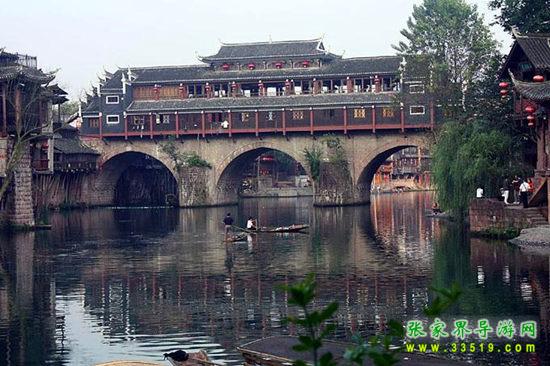
The Hongqiao Bridge lies across the Tuo River, and the Wind-and-Rain Tower rises majestically with its grandeur and beauty. This in fact forms a layered landscape that, from bottom to top and from ancient times to the present, spans more than six hundred years of history.
This bridge was first built in the early years of the Hongwu reign of the Ming Dynasty. The people of Fenghuang, who place great faith in feng shui, say that this bridge severed a dragon's neck, leaving a giant dragon's head and body separated. The blame falls on that Anhui lad Zhu Yuanzhang, who was born a monk and listened to the slander of a feng shui master who had traced a dragon vein from the Kunlun Mountains, through the Yunnan-Guizhou Plateau, all the way to the Wuzhai government office. The master said that the imposing Nanhua Mountain standing in the southern suburbs and the extraordinary peak that continues its vein and plunges into the Tuo River were the dragon's head he had been seeking. From this he deduced that one day someone from this place would rise to contend for the Central Plains, and a true emperor would emerge. How could Emperor Zhu allow a potential rival in distant Fenghuang? So with a stroke of his vermilion brush, the dragon's neck was severed, Fenghuang's feng shui was destroyed beyond repair, and Fenghuang could never again produce an emperor.
[Southern Great Wall]
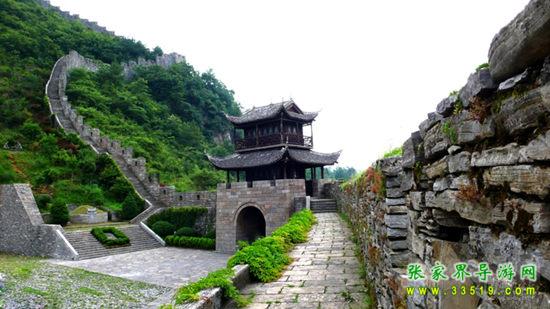
The Southern Great Wall of China was first built in the 33rd year of the Jiajing reign of the Ming Dynasty (1554 AD) and completed in the 3rd year of the Tianqi reign (1622 AD). The wall runs south from the Tingzi Pass at the border with Tongren, north to the Xique Camp in Jishou, with a total length of 382 li. It is known as the "Ten-Thousand-Li Wall of the Miao Frontier" and is one of the ancient structures of massive scale in Chinese history. Most of it passes through the territory of Fenghuang Ancient Town, roughly passing through New Fenghuang Camp, Ala Camp, Gushuang Camp, Desheng Camp, Zhenxi Camp, and Zhenwu Camp.
The wall is about 3 meters high, 2 meters wide at the base, and 1 meter wide at the top. It winds around mountains and crosses waters, mostly built on steep mountain ridges. Along the route, more than 800 watchtowers, artillery platforms, blockhouses, and gate passes were built for garrisoning troops and defense. At the time, generally 4,000 to 5,000 troops were stationed along the line, and at its peak this increased to around 7,000. During the Ming Dynasty, the Miao people on the Hunan-Guizhou border were classified as "raw Miao" and "cooked Miao." The raw Miao were ethnic minorities who did not submit to the jurisdiction of the imperial government. Unable to endure the government's heavy taxes and ethnic oppression, they frequently rose in rebellion. To stabilize the border region and suppress resistance, the Ming court allocated 40,000 taels of silver to build the Great Wall between the raw Miao and cooked Miao. Later, the Qing rulers also partially expanded and repaired the Miao Frontier Great Wall.
Perhaps because the military strength of the southern ethnic minorities was not as great as that of the northern ethnic minorities, the Miao Frontier Great Wall was not built as grand and imposing as the Northern Great Wall. The stones used were only 1/10 to 1/6 the size of those in the Northern Great Wall. Since the Ming and Qing dynasties, the stones of the Miao Frontier Great Wall have been continuously removed by locals to build houses and terrace walls. Today we can only see intermittent sections of the wall and some well-preserved fortresses. There is no dispute that the Miao Frontier Great Wall is an integral part of the Chinese Great Wall, and the site should be included in the World Cultural Heritage list alongside the Northern Great Wall.
[Huangsigiao Ancient Town]
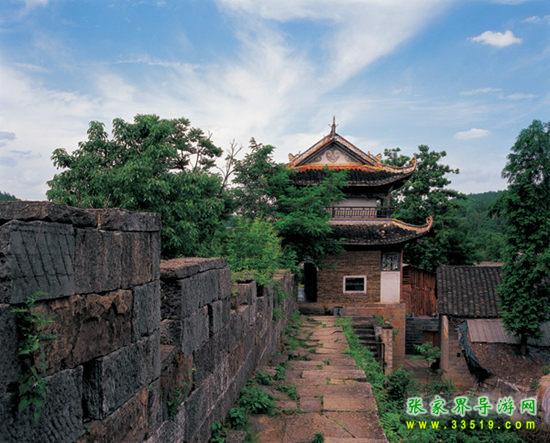
Huangsigiao Ancient Town was first built in the 3rd year of the Chuigong reign of the Tang Dynasty (687 AD) (according to the Geography Volume of the Hunan Provincial Gazetteer: "The Tang established Weiyang County, with the county seat to the southwest of the present administrative center, at the place now called Huangsigiao"). It was renovated and repaired through the Song, Yuan, Ming, and Qing dynasties, and after the founding of the People's Republic, the provincial and county governments allocated funds for restoration, forming a magnificent stone city. It was anciently a garrison site and an outpost for successive rulers to prevent unrest among the western Miao people.
Huangsigiao Ancient Town is a bluestone structure. The walls are 5.6 meters high, 2.9 meters thick, and 2.4 meters wide at the top. It measures 153 meters from east to west, 190 meters from north to south, with a perimeter of 686 meters and a floor area of 2,900 square meters. The stones used in building the town were all bluish limestone, the smallest weighing over 1,000 jin. The stone surfaces were finely chiseled and polished, flat and exquisite in craftsmanship. During construction, a mortar of glutinous rice porridge mixed with lime was used to fill the seams, making the several-hundred-meter wall a seamless, solid, and firm whole. The ancient town has three gates, each with a tall gate tower over ten meters high in Qing Dynasty architectural style. The east gate tower is inscribed "Heyu Gate," the west gate tower "Shicheng Gate," and the north gate tower "Riguang Gate." The roofs of all three gate towers are in the xieshan style, with a lower tier covered by a waist eave and topped with small green tiles, with upturned eaves and flying corners, extraordinarily magnificent.
The upper part of the wall is saw-toothed in shape, with 300 arrow crenellations and two protruding artillery platforms. Standing on the artillery platform, one can imagine the past: spears and halberds standing in rows beside the crenellations, figures moving on the platforms, and beacon smoke rising from watchtowers on the hills outside the town. It is as if one can still see the flash of clashing blades and hear the cries of battle, evoking a sense of tragic grandeur in an instant. In October 1983, Huangsigiao Ancient Town was listed as a provincial-level key cultural relic protection unit.
[Qiliang Cave]
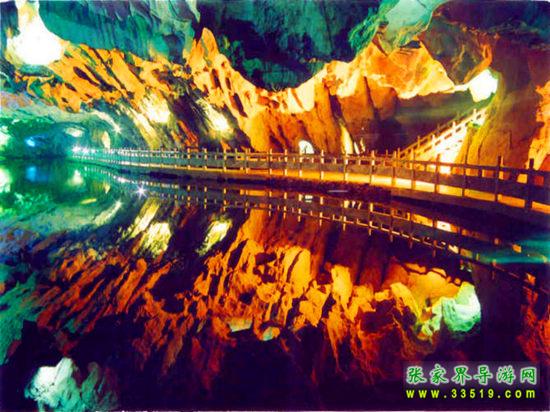
Qiliang Cave is located four kilometers north of the county seat. It is a typical carbonate rock cave, known for its four great characteristics: wonder, elegance, vastness, and seclusion. The cave is over 6,000 meters long and divided into five major scenic areas: the Ancient Battlefield, the Gallery, Heaven, the Dragon Palace, and the Yin-Yang River. Within the cave there are mountains, and within the mountains there are caves, all interconnected. It combines fantastic rocks and ingenious stones, flowing springs and flying waterfalls in one cave, with stalagmites, stone pillars, and stalactites in thousands of forms composing incomparably magnificent scrolls. A small stream flows through the cave, its current gentle, with light falling on the rock walls and ripples reflected in the water, dreamlike and illusory. Neon lights of all colors shine on the stalagmites, stone curtains, and stone flowers, creating a world of dazzling splendor. Inside the cave there is a large hall, said to be a gathering place for the Miao people. In the hall stands a stone with a small hole; blowing "woo-woo" into the hole makes the entire hall echo with a deep horn sound. The Miao people of old used this method to relay orders.
[Ximen Gorge Rafting]
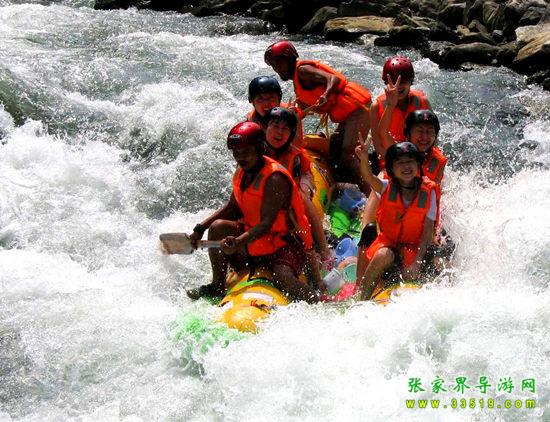
Ximen Gorge is located in Jixin Ancient Town, only 20 kilometers from Fenghuang County, a famous historical and cultural city of China. It is adjacent to National Highway 209, with extremely convenient transportation.
The full course is 6 kilometers, originating in the mountains of the Liangtouyang Nature Reserve. Along the way, steep cliffs flank the route, trees are lush, the water is clear, and rapids and dangerous shoals are scattered like stars. There are more than 30 rapids and dangerous shoals in total, including Hutiaojian, Bailong Shoal, Wolong Shoal, Qinglong Gorge, Guijianchou, and Longwang Shoal. Among them, Qinglong Shoal is the most famous, with a total length of 400 meters and a drop of over 20 meters. Together with Longwang Shoal, it can be called a classic of domestic rafting.
[Tuo River Stilted Houses]
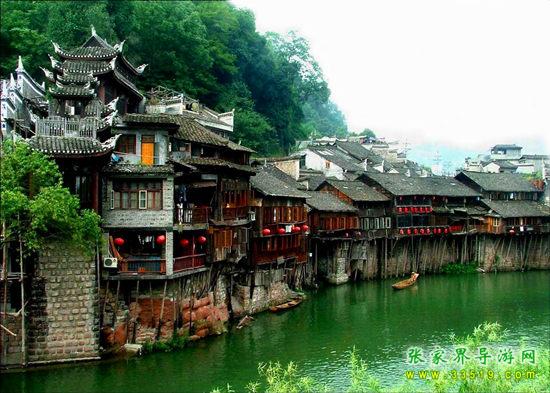
The Tuo River is the mother river of Fenghuang. It flows gently along the city wall, nurturing the sons and daughters of the ancient town for generations. Boarding a black-awning boat, listening to the boatman's work songs, and gazing at the century-old Tujia stilted houses on both banks creates a uniquely charming experience.
Sailing downstream and passing through Hongqiao Bridge, a scene of Jiangnan water town unfolds before your eyes: Wanshou Palace, Wanming Pagoda, Duocui Tower... A feeling of being far from the mundane world arises spontaneously. On the south bank of the Tuo River is the ancient city wall, built of purplish-red sandstone, elegant yet majestic. The wall has two gate towers, east and north, weathered by time yet still magnificent. The Tuo River water is clear, and the channel by the city wall is very shallow, with a gentle and leisurely current. You can see soft water plants swaying in the gentle ripples, and you can pole a long bamboo punt upstream.
The clusters of stilted houses built along the Tuo River are near the East Gate Hongqiao Bridge and the North Gate Jumping Rock. Standing on their slender legs in the Tuo River, they are like a landscape that will never return.
[North Gate Ancient City Tower]
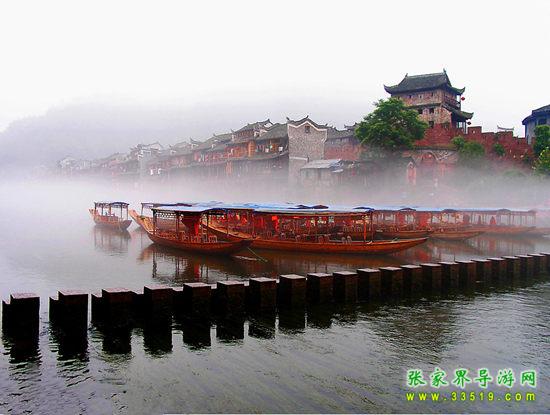
The North Gate Ancient City Tower was first built in the Ming Dynasty. On the north side of Fenghuang, commonly known as the North Gate City Tower, its original name was "Bihui." During the Yuan and Ming dynasties, Fenghuang was the seat of the Wuzhai Chief's Office and had an earthen city. During the Jiajing reign of the Ming Dynasty, the Zhen'gan Lieutenant Colonel was transferred from Mayang to garrison here, and in the 35th year of Jiajing (1556), the earthen city was rebuilt as a brick city, with four great gates, each covered with a tower.
By the Qing Dynasty, the ancient town's military status became increasingly important. Successively, the Fenghuang Hall, the Zhen'gan Town, and the Chen-Yuan-Yong-Jing Military Defense Circuit headquarters were established here, and the construction of the ancient town was strengthened. In the 54th year of the Kangxi reign (1715), the brick city was rebuilt as a stone city, and the north gate was named "Bihui Gate," which has been preserved to this day. The North Gate Ancient City Tower is built of local red sandstone blocks, with exquisite craftsmanship and fine chiseling. The gate is a half-moon arch, with two doors wrapped in iron plates and densely riveted with large round-headed iron nails. The gate tower is built of blue bricks, with a double-eaved xieshan roof, a post-and-beam wooden structure, and a stone base with a rolled top. The outward-facing side of the tower has two tiers of gun ports, four in each tier, capable of controlling a 180-degree defensive range outside the gate. The North Gate Tower and the East Gate Tower are connected by the city wall. Facing the clear Tuo River in front, it served both a military defensive function and a flood control function for the city, forming a solid barrier for the ancient town. Despite repeated wars, it still stands majestically on the bank of the Tuo River.
[Wenchangge Primary School]
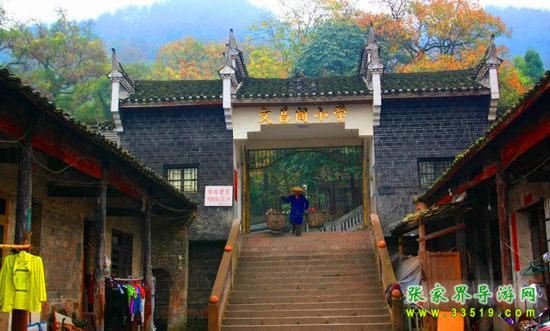
Wenchangge Primary School in Fenghuang Ancient Town was founded in the 31st year of the Guangxu reign of the Qing Dynasty (1905). Located in the south of Fenghuang, a famous historical and cultural city of China on the Hunan-Guizhou border, at the northern foot of the scenic Nanhua Mountain National Forest Park, the young Fenghuang native Tian Xingkui, harboring the dream of "saving the nation through education," traveled east to Japan to study at Hongwen Normal School, where he befriended Huang Xing, Qiu Jin, and others, and joined the Tongmenghui. In 1905, upon completing his studies and returning home, with the idea of "revitalizing China, with the priority on cultivating people," he founded the "Mengyang School" (the predecessor of Wenchangge Primary School) at the foot of Nanhua Mountain in his hometown of Fenghuang, becoming its first principal.
Wenchangge Primary School has experienced a hundred years of vicissitudes, with flourishing culture and abundant achievements. Today, it will bravely shoulder the heavy responsibilities of the times with vigor and vitality. This pearl of basic education will shine even more brilliantly.
[Nanhua Mountain National Forest Park]
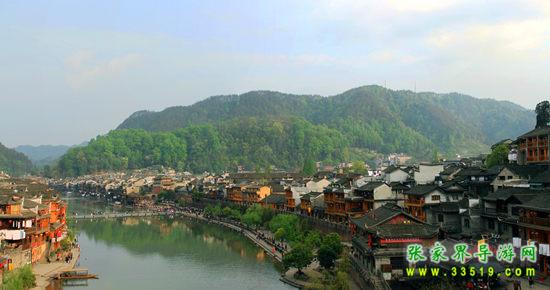
Nanhua Mountain National Forest Park is located on the south side of Fenghuang Ancient Town, with a total area of 2,354 hectares, 3 kilometers wide from east to west and 5 kilometers long from north to south. It contains 45 peaks of various sizes, 72 ravines and valleys, 21 mountain springs and wells, and numerous sinkholes and karst caves. Legend has it that the Old Man of the South Pole sprinkled divine water here, and all things began to grow. Therefore, the local people praised this mountain as Nanhua Mountain. Nanhua Mountain has deep forests and lush trees, with layers upon layers of green. The famous Nanshe poet Mr. Tian Xingliu wrote a poem in praise: "Green mountains a hundred thousand li, layers of emerald mist; the first is Nanhua, which is the main peak. Surrounding pine waves roll on without end, from time to time adding to the temple gate's bell." In the past, the eight scenic spots of ancient Fenghuang — Dongling Yinghui, Nanhua Diecui, Qifeng Tingxiu, Shansi Chenzhong, and Lanjing Qiaoge — were all in Nanhua Mountain. The Nanhua Mountain National Forest Park scenic area has creatively constructed five major themed scenic zones, encompassing the Divine Phoenix Cultural Scenic Area, Nanhua Zen Forest Scenic Area, Border Town Cultural Scenic Area, Ancient Miao Kingdom Cultural Scenic Area, and Qifeng Temple Scenic Area.
At present, the first phase of the Nanhua Mountain scenic area, the Divine Phoenix Cultural Scenic Area, has been completed. More than ten themed attractions gather the 7,800-year mysterious phoenix culture of China. Ascending step by step, one feels as if entering a divine realm.
[Shujiatang]
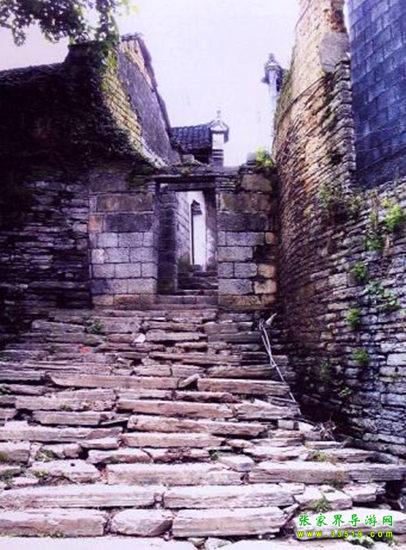
Shujiatang is located in Huanghe Township, Fenghuang County, also known as Shujiatang. It was once the garrison camp of Yang Zaisi, the third son of Yang Liulang of the Yang family generals of the Northern Song Dynasty, in Fenghuang. The ancient castle's layout is very distinctive and rationally planned. There are 13 large stone gates still existing in the town, all built of single blocks of stone, with extraordinary grandeur.
[Stone-Slab Old Street]
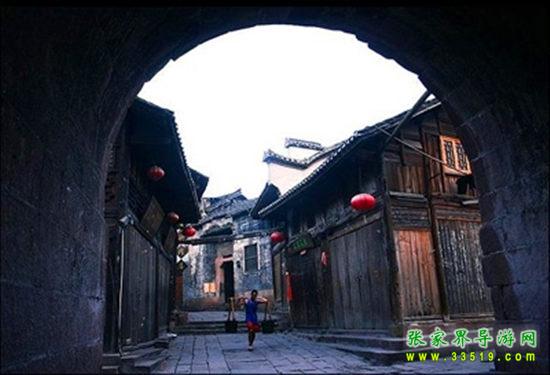
The bluestone-slab street, less than 5 meters wide, runs west from Daomenkou, passing through Cross Street, Dongzheng Street, Xizheng Street, Huilongge, Yingshaochong, Doushanla, Jieguan Pavilion, Shen Congwen's grave, all the way to the Number One Spring Under Heaven, with a total length of over 3,000 meters. It is the most bustling commercial street in Fenghuang. The buildings and lanes on both sides of the street allow you to fully appreciate the myriad charms of the ancient town.
[Wanming Pagoda]
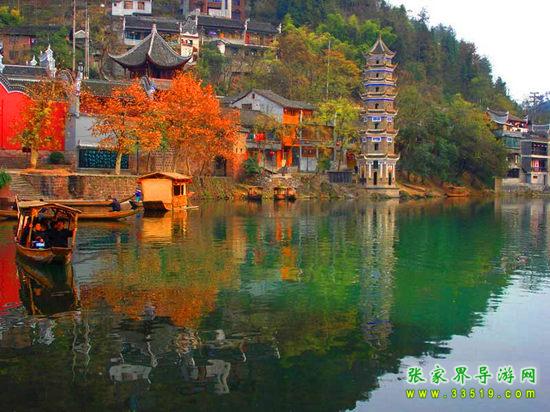
Located at the foot of Dongling Mountain by the Tuo River, with the ornately carved Xiachang Pavilion to the east and the rainbow-like Wind-and-Rain Bridge to the west. The pagoda is now 21 meters high, a six-sided brick pagoda of large tier, decorated with colored paintings and sculptures; all six sides have full-moon arched doors and windows, and the small pagoda is exquisite and elegant.
[Wishing Pavilion]
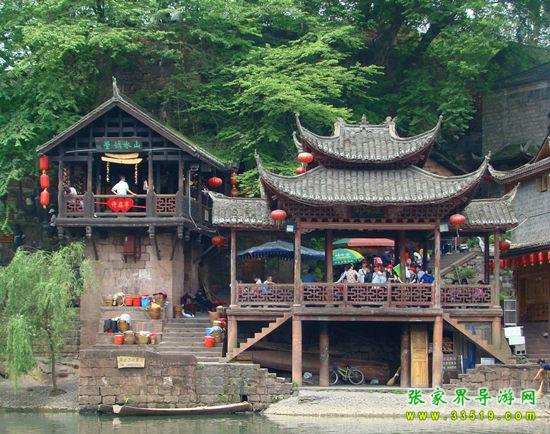
The Wishing Pavilion is located at the dragon's head position of the dragon vein of Fenghuang Ancient Town, a pavilion on the stone-slab path along the river beside the "Hongqiao" of the Fenghuang Scenic Area and on the East Gate Tower. Because of the outstanding people and beautiful scenery, locals have long come here to make wishes and pray for blessings. It is also known as the Wishing Pavilion for "gathering the spiritual charm of mountains and waters, locking past and present lives."
[Wanshou Palace]
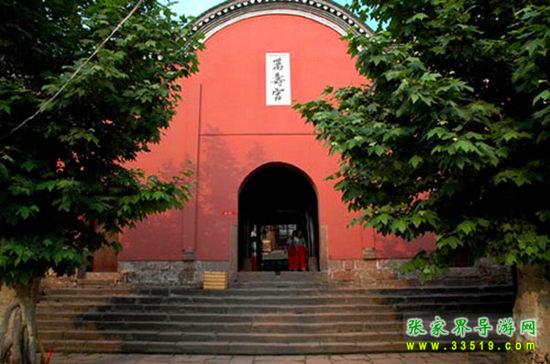
Wanshou Palace, also called the Jiangxi Guild Hall, is located in the scenic Shawan outside the East Gate of Fenghuang. It was first built in the late Ming and early Qing dynasties, with large-scale construction in the 20th year of the Qianlong reign of the Qing Dynasty (1755). In the 4th year of the Xianfeng reign (1854), the Jiangxi native Yang Si built the Xiachang Pavilion on the west side; in the 17th year of the Republic of China (1928), the Yang Tower was built on the north side of the main gate.
[Shanjiang Miao Village]
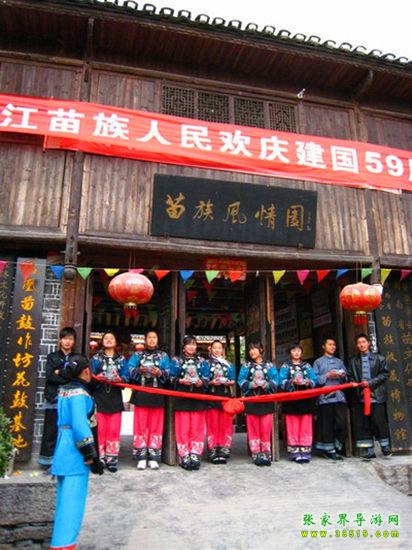
Shanjiang Miao Village (also known as Zongbing Camp) is located in a valley 20 kilometers northwest of Fenghuang. It is a small mountain village with a rich Miao ethnic flavor. In the Miao language, Shanjiang is called "Bagu," meaning Toad Cave, because there is a cave near the village with many toads, hence the name. Calling Shanjiang "Zongbing Camp" originates from the Qing Dynasty when troops were stationed here and a lieutenant colonel's barracks was established during the suppression of the Miao uprising. As for the name "Shanjiang," after liberation a Shanjiang Reservoir was built on the mountain northwest of the village. The Miao village lacked water, and after the reservoir was completed, visitors came in droves. People called "Bagu" Shanjiang, and over time the administrative name was changed to "Shanjiang." Shanjiang retains ancient Miao customs.
Sanjiang Miao Village is currently the Miao village with the largest concentration of Miao people around Fenghuang Ancient Town. It has rich ethnic customs and is the Miao village that tourists most enjoy visiting to experience ethnic culture.
[Gouliang Miao Village]
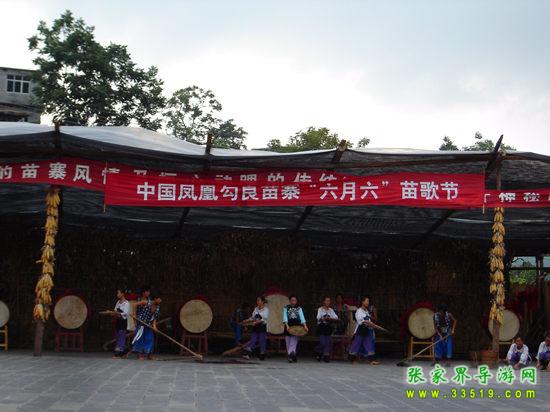
Gouliang Miao Village is located in Gouliang Village, Luochaojing Township, in the northwest of Fenghuang, a famous historical and cultural city. It is 29 kilometers from Fenghuang Ancient Town and is a typical remote and primitive raw Red Miao tribe. The entire village is divided into three natural villages — upper, middle, and lower — with over 300 households and a population of over 1,000. Because of its geographical position at the junction of Hunan and Guizhou, the Central Plains Han culture and the Southwest Chu shaman culture collided and merged here, forming a unique cultural phenomenon and producing rich folk cultural heritage. Gouliang Miao Village was first built in the 3rd year of the Chuigong reign of the Tang Dynasty (679 AD) and has a history of 1,300 years. It has long been known as the "First Village of the Miao Frontier." It has rich folk customs and beautiful scenery, with Miao witchcraft performances, the Guyao Pond Waterfall Group, and the Chalong Cave Waterfall and other scenic spots.
[Guantianshan Miao Village]
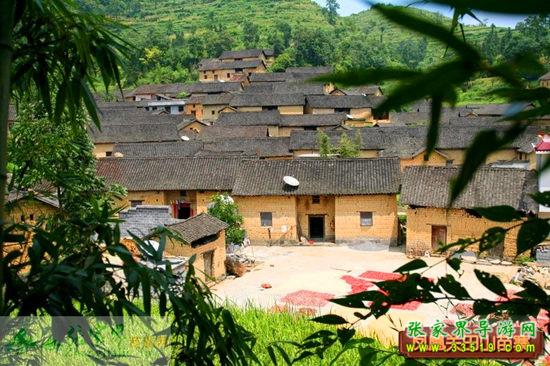
Guantianshan Miao Village is located in Fenghuang, the 101st famous historical and cultural city of China. It is adjacent to National Highway 209, on the same highway line as Qiliang Cave — one of the eight great scenic spots of Fenghuang Ancient Town, the Underground Palace — and Ximen Gorge Rafting. It is at the central node of the golden tourism corridor from Zhangjiajie to Fenghuang Ancient Town, convenient for self-driving tours from Hunan, Hubei, Guizhou, and Chongqing. It is the only location shooting site in Fenghuang for "Border Town," "Suppressing Bandits in Xiangxi," "Blood Drum," and "Bloody Xiangxi," as well as a location shooting site for many famous films and TV dramas such as "Past Events of Xiangxi," "Xiangxi Girl Xiaoxiao," and "Divine Gun and Blood Hatred."
[Feishuigu Scenic Area]
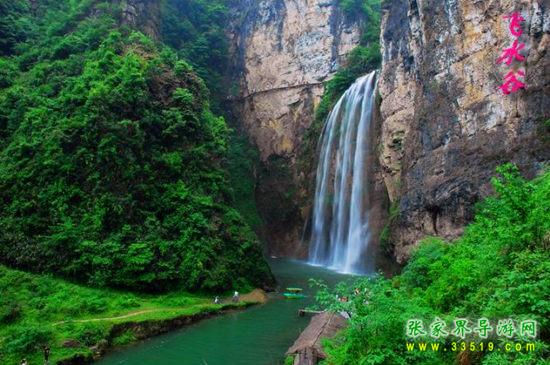
Feishuigu Scenic Area is located in Liaojiaqiao Township (near the Southern Great Wall), only 10 kilometers from the famous historical and cultural city of China. It belongs to the National Geopark and is on the same golden tourism route as the Southern Great Wall and Huangsigiao Ancient Town, with extremely convenient transportation. Feishuigu has been cut off by the Southern Great Wall since the Ming and Qing dynasties, and its location is extremely secluded, unknown to the outside world. In the valley, steep cliffs flank the route, trees are lush, and rare flowers and grasses are interspersed throughout. A clear stream and countless special rocks form more than ten small waterfall groups of different shapes, such as the Three-Tier Waterfall, Bailong Shoal Waterfall, Luoying Waterfall, Xie Waterfall, and Lancaotan Waterfall. The most spectacular is the Feishuigu Great Waterfall at the end of the valley. It is over 100 meters high and over 30 meters wide. In seasons with abundant rain, the waterfall roars like thunder, shaking the area for miles; mist fills the valley, and one cannot see clearly even a few meters away.
Due to its special historical background and geological landforms, Feishuigu possesses many uniquely characteristic cultural landscapes and historical relics. On a riverbank less than 500 meters long, dozens of ancient rice mills for processing are distributed, and it has the only five-tier interconnected ancient rice mill in Hunan Province. The "Refuge Cave" used to escape bandits and the "Bandit Cave" used to hide bandits face each other across the river, coexisting for a long time, which is also a most peculiar landscape. On the nearly hundred-meter-high cliff, there still remain the broken walls and ruins of the Southern Great Wall beacon tower. According to expert verification, Feishuigu was the largest processing base for garrison troops and villagers during the Ming and Qing dynasties.
Transportation
1. At the exit of Jishou Railway Station, there are direct minibuses from Jishou to Fenghuang (from 5:00 AM to 10:00 PM), taking 90 minutes for the whole journey, with a fare of 20 yuan per person; if you don't see the direct minibus from Jishou to Fenghuang after exiting Jishou Railway Station, walk left from the station to the North Bus Station, where there are also buses from Jishou directly to Fenghuang, also taking 90 minutes, with a fare of 20 yuan per person. The route from Jishou to Fenghuang follows National Highway 209, and the road conditions are occasionally bumpy, with drivers often speeding. Upon arriving at Fenghuang Bus Station, you can take a public bus to the Nanhua Gate Fenghuang Bridge bridgehead and get off, then walk into the ancient town.
2. At the exit of Huaihua Railway Station, take a taxi (costing only a few yuan) to Huaihua West Bus Station, where there are buses from Huaihua directly to Fenghuang (from 7:00 AM to 6:00 PM), taking about 3 hours, with a fare of 35 yuan per person. The road conditions from Huaihua to Fenghuang are poor, so it is recommended to go via Jishou or Tongren.
3. Near Tongren Railway Station, there are buses from Tongren directly to Fenghuang (from 7:30 AM to 4:30 PM), taking 1 hour, with a fare of 25 yuan per person. The road conditions are good, and it is recommended.
4. In Daxing (Fenghuang), Tongren, Guizhou, there is a small airport, currently with direct flights from Guangzhou to Daxing and from Guiyang to Daxing. From Tongren Daxing Airport to Fenghuang Ancient Town, the drive takes only 40 minutes. The shuttle bus at Daxing Airport stops at 7:00 PM. From the airport to Fenghuang Ancient Town, you can charter a car for about 120 yuan, or consider carpooling.
5. There are 3 ways to travel from Chongqing to Fenghuang Ancient Town, as follows:
(1) Chongqing—(train 9-16 hours)—Huaihua—(train 3-5 hours)—Fenghuang Ancient Town
(2) Chongqing—(plane 1 hour 10 minutes)—Changsha—(plane 50 minutes)—Zhangjiajie—(bus 4 hours)——Fenghuang Ancient Town
Flight times: Chongqing——Changsha (8 flights in total, with flights every day)
(3) Chongqing Longtousi Bus Station——Fenghuang Bus Station (160 yuan per person; 6.5 hours) [2]
6. Tourists choosing air services can transfer at Zhangjiajie Hehua Airport to go to Fenghuang Ancient Town. Outside Zhangjiajie Hehua Airport, take Bus No. 4 to the city bus station, or take a taxi for 15-20 yuan to the bus station. There are three buses to Fenghuang daily, at 8:30 AM, 2:30 PM, and 3:30 PM, with a fare of 70 yuan per person, covering 220 kilometers in total, taking 4.5 hours to reach Fenghuang.
7. Changsha and Changde have already opened direct air-conditioned buses to Fenghuang. From Changsha to Fenghuang takes about 4.5-5 hours, with a one-way tourist direct bus fare of 140 yuan per person; from Changde to Fenghuang takes about 3.5-4 hours, with a fare of 100 yuan per person.